 DREADNOUGHT ROCK
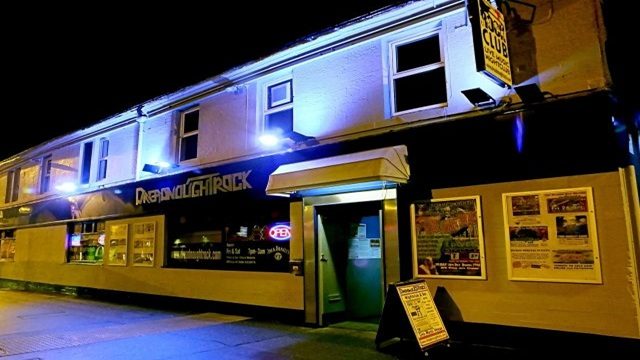
The best things in a town are often the ones we stop noticing.
They've always been there, they're reliable, and over time they become part of the furniture of everyday life.
In Bathgate, one of those places has opened its doors every weekend since 1972.
I'm talking, of course, about Dreadnought Rock: first at the Old Dreadnought Hotel on Whitburn Road, and now in its own custom-built venue on King Street.
Being taken for granted is, in its own way, the highest compliment a venue can get. It means the Dread has been there for so many weekends that people stopped thinking of it as remarkable and just thought of it as the Dread. It's always been there.
But stop, step back and look, and it is quite remarkable.
In 2027, Dreadnought Rock turns 55. Not 55 months, 55 years. That deserves a proper look, so let's ask the question that I, and many others, have possibly wondered: where does a Scottish rock club in a West Lothian town actually stand, in terms of longevity, next to the great live music venues of the UK and the world?
Where the Dread stands
First, an honest note. There is no official league table of the world's longest-running live music venues, and anyone who hands you a neat ranking is guessing. A lot of these places began as dance halls, jazz basements, bus depots and hotel function rooms, and they've all lived different lives. So instead of a ranking, here is a line-up by the year each one first opened its doors, with the Dread slotted in where it belongs.
1878, Gruene Hall, Texas. The grandparent of the list, a dance hall still putting on live music.
1934, Barrowland Ballroom, Glasgow. Opened as a dance hall, rebuilt after a fire, and a concert venue since the 1980s.
1942, 100 Club, London. Live music since October 1942, and the 100 Club name since 1964.
1957, The Cavern, Liverpool. The most famous basement in music, rebuilt in 1984 and open continuously since 1991.
1957, The Troubadour, West Hollywood.
1964, Whisky a Go Go, West Hollywood.
1970, First Avenue, Minneapolis. Opened as The Depot in a former bus station, and renamed First Avenue in 1982.
1972, Dreadnought Rock, Bathgate. A rock disco in a hotel function room that grew into Scotland's longest-running rock club.
1973, Dingwalls, Camden.
1973, The Roxy, West Hollywood.
1980, Rock City, Nottingham.
1980, The 9:30 Club, Washington DC. It outgrew its first home and moved to a bigger building in 1996.
1982, The Fleece, Bristol.
1986, 924 Gilman Street, Berkeley.
1990, King Tut's Wah Wah Hut, Glasgow.
1990, Cathouse Rock Club, Glasgow.
Read that list through and the Dread's place in it is clear. It opened before many of the names that turn up on every best-venue list going, most of them in big cities. Only seven of the places above are older, and nearly all of those are in major music cities: London, Liverpool, Los Angeles, Minneapolis and Glasgow. Then there's a rock club in Bathgate.
Most of the others are concert venues. The Dread does something a little different. It's a live venue and a full rock club under one roof, with bands downstairs and rock upstairs until 3am, every Friday and Saturday.
Small, independent and proud of it
Here's the part a list of dates doesn't show: size.
Rock City holds around 2,000 people, Barrowlands around 1,900, and the 9:30 Club 1,200. Several of the others sit inside bigger promoter or venue groups, with the budgets and head offices that come with them.
The Dread holds around 400 across its two floors, a couple of hundred downstairs for the live music and about the same upstairs in the club.
The Dread is a fraction of that size and fully independent. No corporate owner, no head office, nobody to answer to except the people who come through the door. That's what makes 55 years more remarkable, not less.
It's also what has made the Dread the underdog from day one. It's small, it's in a town rather than a city, and it's easy to underestimate. It rarely makes the big-city lists, and it doesn't get the national write-ups that its famous neighbours do. It just keeps turning up every weekend, and it has outlasted a good few of the bigger names over the decades.
How it's lasted
Look closely at that list and you notice something. Almost none of these places stayed exactly as they began. The Cavern was rebuilt. The 9:30 Club moved to a bigger building. Barrowlands was rebuilt after a fire. The venues that last aren't the ones that never change. They're the ones that can change their address, their building or their format without losing what made people love them.
The Dread has done exactly that. It has always been a Bathgate club, but it began in 1972 in the function room of the Old Dreadnought Hotel on Whitburn Road. When the hotel closed in 2006 after its owners went bust, the night didn't end with it. The Dread stayed in Bathgate and then moved to King Street, into a custom-built two-level venue with live music on the lower floor and the club above. Same crowd, same weekend ritual, a new home built for the job.
"I've always viewed it as an adventure, not just a job. Now it's a legacy" said the Headmaster
Then came the hardest test of all. During Covid the venue was open for only around ten weeks in a whole year. In the early part of the pandemic it faced the impossible task of reopening, only to be forced to close and start all over again. Furlough, funding from Creative Scotland and invaluable support from the Music Venue Trust and you guys all helped, but what kept the Dread alive was the same thing that always has: The people who wanted it back. Rising costs, changing tastes and a rougher road for grassroots venues have all had their turn since, and it's still here but won't lie : It's tough going sometimes.
There's no secret to it. It's a simple routine that works. The same two nights every week. A crowd that mixes old regulars with people who came for the first time last month. A room that welcomes anyone who loves loud guitars and a good tune, whatever they're wearing. That's what 55 years is made of.
Right on your doorstep
If you want to say you've been to one of the famous rock venues, you used to need a train ticket to Glasgow, London or Nottingham. The Dread puts you in the same sentence without even leaving West Lothian.
It isn't everyone's night out, and it doesn't pretend to be. It doesn't chase the chart or the dance floor. It does one thing: Music played loud by people who love it, and it has done it properly for longer than most of its famous neighbours have existed.
Being brilliant at one thing for 55 years is a better recommendation than being half-good at everything for five following the latest fad or trend.
The years ahead
The 55th anniversary in 2027 isn't an ending. It's a just a checkpoint on the way to 60 in 2032, and the plan is simple: keep opening the doors and keep doing what we do - every weekend !
We'll be planning something in 2027 to mark the occasion. As mentioned, it's a checkpoint moment, but nevertheless it has to be marked in style.
What the Dread needs now is what it has always needed:
People turning up. If you've been before, come back and bring someone who hasn't. If you've never been, pick a Friday or a Saturday. Doors are at 7pm, live music runs from around 8 until 11, and the rock club carries on until 3am.
A venue doesn't last 55 years by luck. It lasts because enough people decide, week after week, that it's worth showing up for.
It also doesn't hurt to have some launatics behind the scenes that keep things as fine tuned as possible called the Rock Crew. All those poor souls over the decades that have served you, cleaned up after and joined in the adventure too.
Come and be part of the next 55.
Get involved: get tickets and see what's on, right on your doorstep.